PRECISION WITHOUT COMPROMISE.
VISION BEYOND CONVENTION.

At re-medical, we combine advanced robotics with next-generation particle tracking to redefine medical imaging, delivering uncompromising precision and unlocking entirely new viewing angles for radiotherapy.

SPECTRAL RADIOGRAPHY

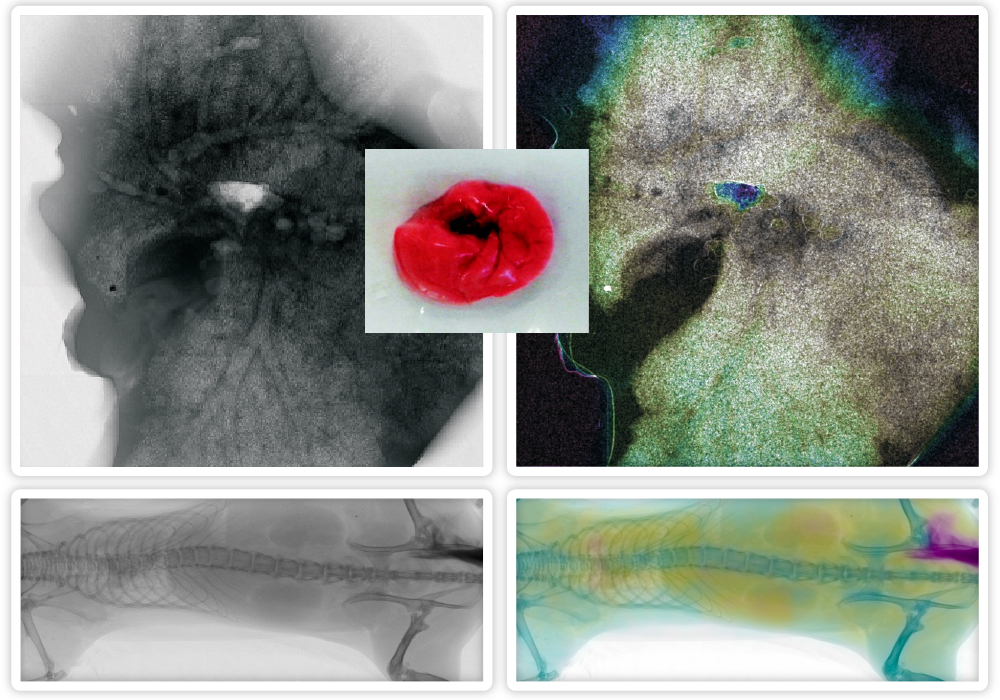
Photon counting detectors excel in bio-imaging due to their high sensitivity and dynamic range. The high sensitivity of photon counting detectors makes them helpful in imaging low X-ray attenuating light objects, such as tissue. Thus, these detectors are ideal for bio-related applications. High dynamic range reveals features in samples that remain hidden from other types of X-ray imaging detectors. Moreover, the structure of the model can be visualized thanks to the spectral sensitivity of the device. Only specific structures can be highlighted, and other ones can be suppressed.

SPECTRAL COMPUTED TOMOGRAPHY

Spectral computed tomography enhances 3D imaging, advancing tissue identification and cancer treatment research. Spectral radiography can be extended to 3D using computed tomography. This makes it possible to recognize different types of tissue in natural form. This level of information can be beneficial for cancer treatment research, as it gives better data for irradiation planning.

SOFT TISSUES DIFFERENTIATION

Innovative imaging cameras combine absorption imaging with phase-contrast enhancement to deliver exceptional clarity and detail when analyzing large tissue samples. The capabilities of this technology were demonstrated on a deflated mouse lung sample. While conventional imaging methods struggled to distinguish the granular structure of alveoli from surrounding lung tissue, the advanced system clearly identified alveoli as well as different tissue types and structures. By optimizing the X-ray beam spectrum and detector energy sensitivity, the high-contrast X-ray system produces highly detailed images and reveals features typically hidden by low contrast, opening new possibilities for the study of lung microstructures.

OUR TECHNOLOGY IS APPLIED IN VARIOUS MEDICAL USE CASES

re-medical transfers years of elite research and extensive experience in photon-counting technology and robotics directly into the medical sector. Our platform builds on integrating imaging technologies into six-axis robotic arms, granting diagnostic procedures unprecedented flexibility and entirely new viewing angles.

Beam TraX

Our detectors are being tested as a method to improve head cancer ion beam irradiation. The new device Beam TraX allows treatment of a smaller tissue volume, which can help reduce negative side effects. The tests focus on patients with tumors near the base of the skull. This area is challenging to access for irradiation due to the proximity of essential structures like the brainstem. This device called Beam TraX measures secondary radiation emitted from the patient, and based on this data, scientists understand what kind of matter is being irradiated.

ThyroPIX

Newly developed robotic device called ThyroPIX could help to more accurately map the distribution of radioactive iodine in the detection and treatment of thyroid tumors. It uses a particle camera to precisely locate where and how the radiopharmaceutical acts. It uses Compton scattering to determine the direction and energy of each individual incoming particle of ionizing radiation. In this way, it is possible to obtain detailed information on the size and shape of thyroid residues, thus verifying the distribution of therapeutic activity in the patient’s body.

PHOTON COUNTING TECHNOLOGY

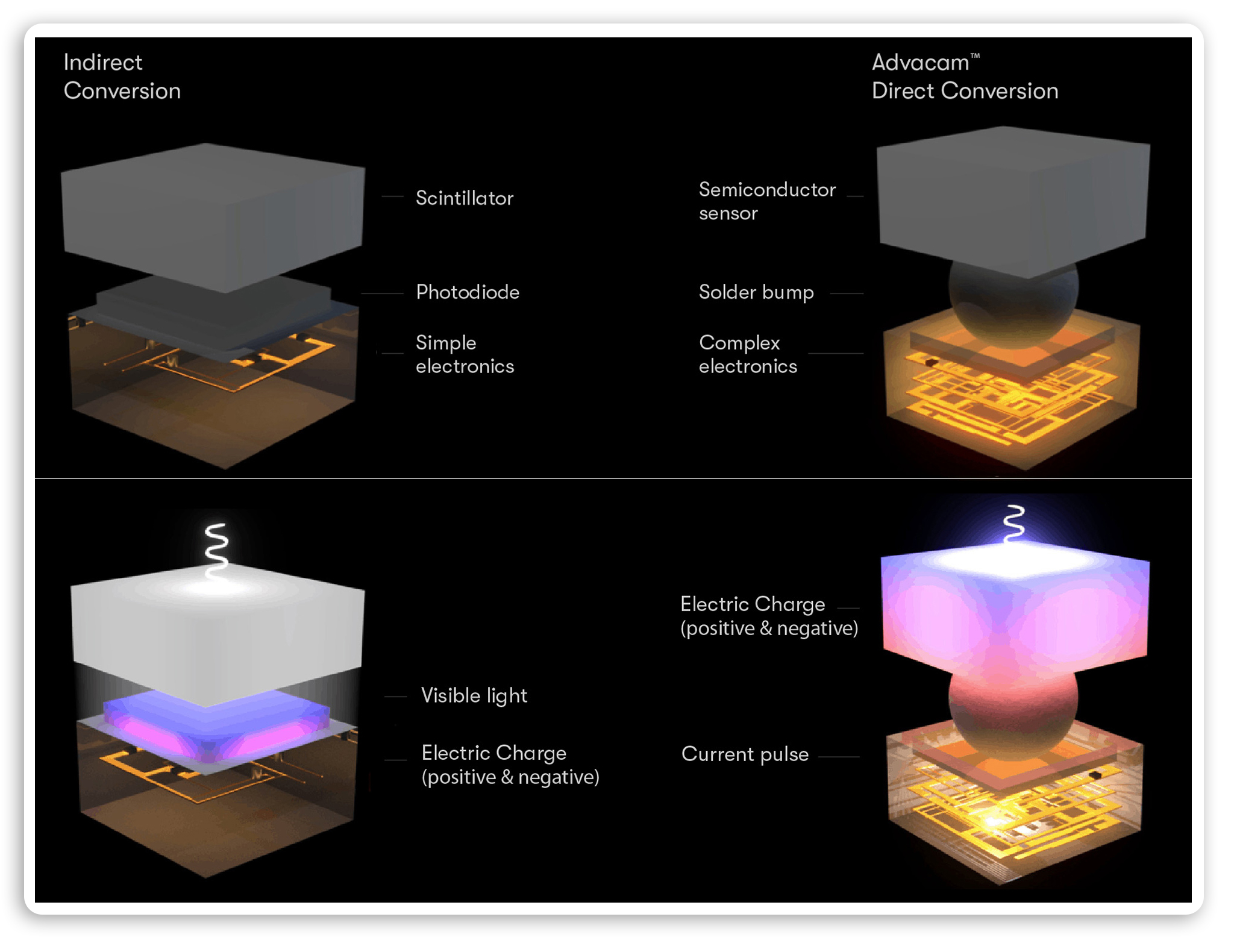
ADVACAM’s imaging cameras are direct conversion single photon counting pixel detectors that represent the cutting edge of current radiation imaging technology. The term “single photon counting” means that every single photon of X-ray radiation detected in individual pixel is processed and counted. The technology brings two major advantages in comparison to the conventional X-ray imaging – high contrast together with sharp images and spectral information of X-rays that allows material specific information to be displayed in colors